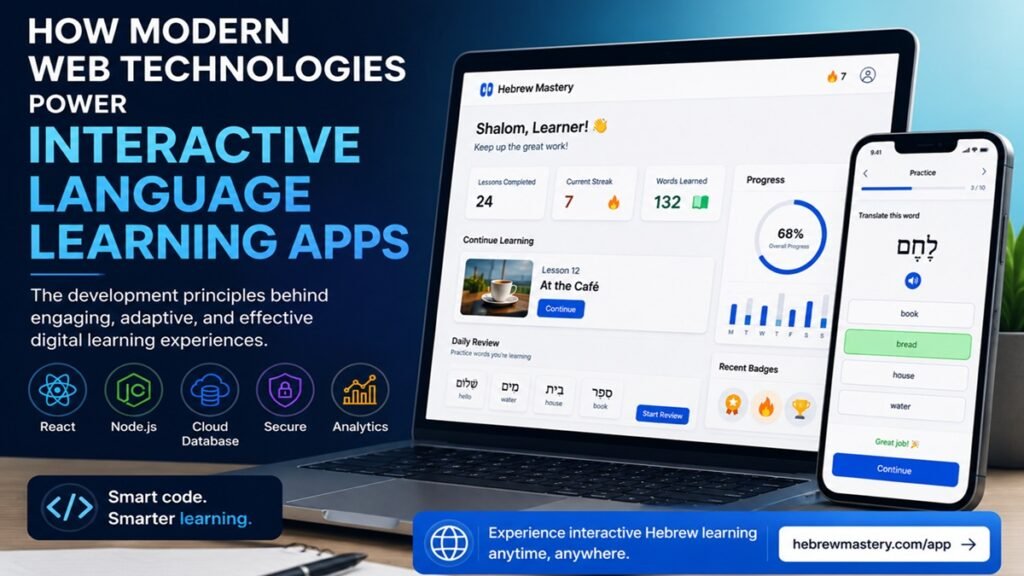
How Modern Web Technologies Power Interactive Language Learning Apps
Language learning has evolved far beyond textbooks and printed flashcards. Today’s learners expect interactive web applications that provide instant feedback, adaptive quizzes, spaced repetition, audio pronunciation, and personalized learning paths.
Behind these engaging experiences is a combination of modern web technologies that make educational software responsive, scalable, and effective.
Whether you’re building an IoT dashboard, a SaaS platform, or an educational application, many of the same development principles apply.
Why Educational Apps Need Dynamic Experiences
Unlike traditional websites that simply display information, modern educational platforms continuously interact with users.
A language-learning application should be able to:
- Track learner progress
- Save completed lessons
- Generate personalized quizzes
- Provide real-time feedback
- Synchronize progress across multiple devices
- Support audio pronunciation and interactive exercises
Delivering these features requires a robust full-stack architecture rather than a collection of static web pages.
Creating Interactive Learning Experiences
Most modern educational platforms rely on frontend frameworks such as React, Vue, or Angular.
These technologies make it possible to build reusable components like:
- Interactive flashcards
- Vocabulary matching exercises
- Multiple-choice quizzes
- Timed review sessions
- Progress dashboards
Instead of reloading entire pages, learners receive immediate feedback as they complete each activity, creating a smoother and more engaging experience.
Using Data to Personalize Learning
One of the greatest advantages of digital education is personalization.
Educational platforms can monitor learner behavior, including:
- Correct and incorrect answers
- Time spent on lessons
- Frequently missed vocabulary
- Lesson completion rates
- Review history
This information allows the platform to recommend what each learner should study next, making learning more efficient than following a fixed curriculum.
APIs Expand Platform Capabilities
Modern educational software rarely works in isolation.
Developers frequently integrate APIs for services such as:
- User authentication
- Cloud storage
- Text-to-speech
- Speech recognition
- Analytics
- Notification systems
These integrations help developers deliver sophisticated functionality while reducing development time.
Gamification Encourages Consistent Practice
Successful educational applications often incorporate game mechanics that motivate users to continue learning.
Common features include:
- Achievement badges
- Daily learning streaks
- Experience points
- Progress levels
- Leaderboards
- Unlockable content
These techniques encourage regular engagement, which is especially valuable in language learning where consistent practice leads to better retention.
Responsive Design Matters
People now study on a wide variety of devices throughout the day.
Educational applications should perform well on:
- Smartphones
- Tablets
- Laptops
- Desktop computers
Responsive layouts, touch-friendly interfaces, and fast loading speeds help ensure learners can continue their lessons wherever they are.
Performance Is Part of the User Experience
Educational software should remain responsive even during extended learning sessions.
Developers can improve performance by:
- Lazy-loading lesson content
- Compressing media assets
- Caching frequently used resources
- Optimizing API requests
- Reducing unnecessary component re-rendering
A fast application keeps learners focused on learning rather than waiting for pages to load.
Security Should Never Be an Afterthought
Educational platforms often store user accounts, learning history, and personal information.
Developers should implement security best practices, including:
- HTTPS encryption
- Secure authentication
- Password hashing
- Regular database backups
- Proper access controls
- Compliance with applicable privacy regulations
Strong security measures protect both users and the platform itself.
A Real-World Example: Digital Hebrew Learning
These same development principles are especially valuable for specialized educational platforms like Hebrew Mastery. Instead of presenting learners with static vocabulary lists, modern educational software can provide adaptive lessons, interactive quizzes, pronunciation practice, and personalized review schedules that improve long-term retention.
A good example is the Hebrew Mastery App and the Hebrew Mastery portal, which combines responsive web technologies with structured language lessons to help learners build vocabulary, strengthen grammar skills, and track their progress across desktop and mobile devices. Features such as instant feedback, interactive exercises, and personalized review sessions demonstrate how thoughtful web development can transform language education into a more engaging and effective experience.
Whether teaching Hebrew or any other subject, combining sound instructional design with scalable web technologies creates educational software that keeps learners motivated while delivering measurable results.
Final Thoughts
Building a successful educational platform involves much more than publishing lessons online. Developers must combine intuitive user experience, scalable architecture, performance optimization, and intelligent personalization to create software that keeps learners engaged.
Whether you’re developing an IoT management dashboard, a productivity application, or a language-learning platform, the same engineering principles—performance, scalability, usability, and continuous improvement—remain essential.
As educational technology continues to evolve, developers have an exciting opportunity to build applications that make learning more accessible, engaging, and effective for users around the world.